On Behalf of Zigray Law Office, LLC | Sep 20, 2017 | blog, Probate Litigation Typically, all but one percent of wills go through the probate process without a problem. This is because courts generally take the stance that a will is in the decedent’s voice and conveys his or her final wishes. And, since that individual can no longer speak about those wishes, Ohio courts will usually stand by the document. This can make challenging a will very difficult. If you plan to challenge a loved one’s will, for instance your father’s, then certain grounds must exist. In other words, you must have a valid reason to bringing forth a challenge. To find out some of the most common reasons for challenging a will, read further. Lack of capacity In order for a will to be valid, the decedent must have had the legal capacity to draft it in the first place. This means that the individual must have been 18 years of age or older and not suffered from a mentally incapacitating state. For example, your father must not have been senile, suffered from dementia, Alzheimer’s or been under the influence of a mind-altering substance. If you plan to challenge the will based on lack of capacity, you must be able to prove that your father did not understand what he was doing when he drafted the will or did not comprehend the significance of the will. Manipulation and fraud Another reason why you might try to challenge the will is if you believe that someone was manipulating your father into writing the will, or if the document is a forgery or fraudulent in some way. If there was undue influence from another source, then your father may not have been able to exercise his own will when drafting the document. There is another will Sometimes, people write multiple wills over the course of the years. Typically, the most recent version supersedes any earlier drafts. This means that if the probate court has an older version, you can challenge it by presenting the newer copy. Witnesses and provisions In order to be valid, wills must contain certain legal elements. For example, in many cases the document must include the signatures of the decedent as well as two adult witnesses that are not beneficiaries named in the will. In addition, the will must contain language that specifically states it is the will of the decedent. Also, the document should name an executor and contain instructions to pass property to a specified beneficiary. If certain legal elements are missing, you may be able to successfully challenge the document. If you are thinking about contesting a will, it is important that you have a valid reason to take the challenge to court. Take the time to research Ohio estate laws and find out if you are eligible to challenge the document and if you have reasonable grounds to do so.
Undue influence: Don’t let it cost you an inheritance
On Behalf of Zigray Law Office, LLC | Aug 22, 2017 | blog, Probate Litigation For as long as you can remember, your father always told you that you’d inherit the estate. You’re an only child, and you have been there for him during his time in need. When your father passed away, you prepared to take over the estate and to take care of business. You were shocked, and rightly so, when you discovered you hadn’t inherited anything. Instead, your father had willed away the estate to someone who cared for him in the nursing home. You suspect that something isn’t right, and you may be correct. Undue influence on a person can result in changes to wills or trusts, and it can make it hard for you to inherit what is rightfully yours. Fortunately, you can contest the will if you believe that your father was influenced to change it prior to his death. What is undue influence? By law, undue influence is when a person deprives another of freedom of choice or substitutes his or her choice against that person’s desire. For example, if the worker who is now named in the will had appeared to your father while he was in a state of dementia, your father might have thought it was you suggesting the changes to his will. It’s very important to be able to show undue influence in court, and being able to prove your father’s inability to make good decisions due to mental impairment could help the court rule in your favor. If you need to prove that your father was mentally impaired, you may need to present medical information to the court. Having a specialist speak to the severity of your father’s condition may also help. Once this is done, the court can decide if the inheritance should revert and be given to you as originally intended.
These 3 tips help you find hidden or missing assets
On Behalf of Zigray Law Office, LLC | Jul 31, 2017 | blog, Probate Litigation One of the things that can make moving on after a loved one’s death difficult is being unable to locate his or her assets. When you can’t locate assets, it could make it hard to finalize the estate plans. It could also mean that someone has taken advantage of your loved one, which is something you want to clear up right away. How can you locate a decedent’s hidden or missing assets? There are a few different things you can try including looking at your loved one’s personal paperwork, safes and other potential hiding spots. 1. Looking in paperwork gives you clues When you look through a person’s documents, they can give you an idea about what kinds of assets the person had. If there is a large transaction at an unusual point or you find a key to a lock box, then that might be the hint you need to locate the assets you were trying to find. 2. Check out personal safes If you find a key to a safe at a bank, or if you know there is a safe at the home that has been unopened, it’s time to look inside for the assets that are missing. Whether it’s money or antiques, many people hide assets that are valuable in safes. You may even find hidden safes in the floors of the home, behind (or in) books, in closets or other unusual locations. 3. Seek assets in unusual hiding spots Have you never been into the basement of your mom or dad’s house? Now might be a good time to look. Has the fireplace oddly never worked for years? There could be a reason your parents refused to turn it on. Check unusual spots for assets, and you may end up turning up something you didn’t expect. These are a few places you can look for hidden assets. Give it a shot, and see what you turn up.
Take these steps to avoid an inheritance dispute
On Behalf of Zigray Law Office, LLC | Jun 27, 2017 | blog, Probate Litigation The last thing anyone wants to see happen after your death is an inheritance dispute. You want to leave behind something for your beneficiaries, and having them fight among themselves is not your idea of how your family should treat one another. There are a couple things you can do to help your family avoid disputes. With the help of your attorney, you can make sure there’s as little risk of a dispute as possible, so your family can receive what you wanted to gift to them and focus more on their emotional healing. 1. Get an iron-clad will While you’re in the mind to do so, it’s a good idea to create a will that is not in any way debatable. The first thing to do is to make sure you create a valid will. After that, you’ll want to include your age, testamentary capacity to show you were of sound mind and body when you created the will, and to show voluntariness, which is a lack of coercion. After this, you need to list all your assets and assign them to the heirs you have. The will should be written in such a way that the language is clear to understand. Finally, sign and date the document. You’ll need a witness document included as well to show that someone else was there to watch you sign the document. 2. Create a living will When you have a living will, it provides a number of instructions to your family. It talks about things like the care you want to receive if you are incapacitated and helps you appoint a durable power of attorney, or a person who makes decisions on your behalf if you are unable to. Since you have to designate these people and your wishes while you’re alive and of sound mind, it’s much easier to show exactly what you want and to enforce those wishes after death. Choosing the right will now can help your family later. Your attorney can create a document that helps you secure your wishes.
Breaching fiduciary duty: Beneficiaries have a right to act
On Behalf of Zigray Law Office, LLC | May 23, 2017 | blog You create a trust knowing that someone has to carry out the duties of the trust after you pass away. That individual has a fiduciary duty to you, your beneficiaries and the trust itself. You expect that individual to make good decisions and to engage in acts that grow the trust or dole it out fairly. If a trustee does not work in the beneficiaries’ best interests, it’s said that the individual is in breach of his or her fiduciary duties. If a person breaches his or her duties, that individual could face a lawsuit from the parties affected by the breach. What is fiduciary duty? In layman’s terms, fiduciary duty is the duty of a trustee to make decisions and to administer a trust in the interests of the beneficiary. For example, a trustee who has been trusted to invest for the beneficiary should invest carefully and take few risks, so the investments do end up benefiting the individual. If that same trustee invests everything into one risky stock and loses everything, then it can be argued that he or she did not work in the best interests of the beneficiary. What is a trustee’s duty to a beneficiary? The trustee has a duty to administer the trust in a way that benefits the beneficiary. He or she needs to preserve the trust’s property as much as possible and keep clear accounts of transactions that take place. If the person is instead an estate representative, then that individual needs to act fairly and fully disclose his or her actions to all beneficiaries of an estate. The representative has a duty to protect the estate and to benefit both the creditors of the estate and the heirs of the estate. What can you do if your trustee or estate representative breached his or her fiduciary duties? You can bring a lawsuit against the individual. Your attorney can help you prove that the trustee or representative had a duty to you, the beneficiary, that he or she breached that duty, and that you suffered financial loses as a result. If you can show all three factors clearly, the court has the potential to rule in your favor.
ESTATE AND PROBATE HELP THROUGHOUT OHIO
Determining a lack of capacity in estate disputes On Behalf of Zigray Law Office, LLC | Apr 25, 2017 | blog, Probate Litigation Your father got older and had to move into a nursing home. You already knew he had a will, and he had set up a trust for your children, his grandchildren. You thought everything was ready and prepared, but when your father passed away, you were shocked to find that the trust had been altered and placed into the name of a worker at the facility where he was treated. How could that happen? Your father had dementia, and there is no way he had the mental capacity needed to make that decision. What can you do? This is a situation where it is a good idea to get your lawyer involved. When your father created a will and trust for your family, it was a legal contract. Now, the changes are technically legal as well, but not if you can prove that he was unable to make the decision to change the trust. What do you need to show to prove that he was unable to make the decision? You’ll need to prove that he had a lack of capacity. A person who doesn’t understand what he or she is doing cannot enter a legal contract with another party. In this case, your father might have thought the worker was a family member or his attorney and signed documents he was confused about. That makes the entire contract null and void, returning it to the previous state when he was legally able to create the trust in a binding form. Can you pursue a claim against a person who made your father sign a new contract while he was lacking the capacity to do so? If someone has made false statements, threats or coerced your father to sign documents, then the court can void the contract. You may also consider pursuing a claim against the party who took advantage of your father. It’s a good idea to have documentation to prove that your father was unable to make a coherent decision, either by showing he was affected by dementia or other conditions that made it hard for him to know what he was doing. Your attorney can help you move forward with a claim against a person who took advantage of your father and help you have the trust returned to its rightful owners. It’s not acceptable for someone to use people’s disabilities or declining health against them. Source: Nov. 30, -0001
ESTATE AND PROBATE HELP THROUGHOUT OHIO
Was a financial claim filed against your loved one’s estate? On Behalf of Zigray Law Office, LLC | Apr 12, 2017 | Probate Litigation When your loved one dies, his or her estate will go through the probate process. If there’s a will on file, after probate, the executor of the estate will distribute the assets according to the distribution plan laid out in the will. If there’s no will on file, the assets will be divided according to Ohio intestacy laws. During probate, creditors to whom the deceased owed money may file claims against the estate for money owed. Let’s say a lender comes forward and claims your deceased father owed him or her $200,000 related to a business deal. Whether the estate pays the claim depends on its viability. Example of a recent creditor claim against an estate In the case of deceased pop star Prince, there has been a lot of confusion about the distribution of his assets – mainly because he died without an estate plan. In addition to the numerous potential heirs who have come forward, creditors have also made their claims against the estate. In a recent filing by a creditor, a former lawyer – who represented Prince in his divorce – has filed a claim for unpaid bills. Lawyers representing the estate denied the claim, saying it was too old to pay as the claim involved a 10-year-old debt. There was also another problem with the $559,000 claim for services rendered: It did not include any proof or itemization. According to the attorneys representing the trust, they have requested documentation and proof of the bill. Ultimately, it’s possible that the court will deny the claim for payment due to a 6-year statute of limitation on debt collection in the state of Minnesota, where the estate is being probated. In the state of Ohio, a similar 6-year statute of limitation applies to all debt collection activities. The judge hasn’t ruled on the matter yet. Defending an estate against creditor claims Not all creditors’ claims against an estate are legitimate. Heirs and family members can sometimes save hundreds of thousands of dollars – or more – if they can successfully defend an estate against illegitimate claims. With the aid of an experienced probate litigation lawyer, Ohio residents can formulate a plan of action in this regard.
Siblings agree to sell family business in trust litigation
On Behalf of Zigray Law Office, LLC | Feb 24, 2017 | Breach Of Fiduciary Duty The death of a parent is never easy. When significant assets are involved, siblings may have disagreements over how the family legacy should be handled. Even when a parent has created an elaborate plan to pass the family company and other assets on to the children, heated disputes may erupt into litigation. Our Toledo area readers may have missed a story from another Great Lakes state that highlights how a detailed estate plan may not always protect against sibling rivalry. The patriarch of the family took great care to create a will and various trusts to provide for his children, as well as the wife of one of his sons who had passed away. He also created a charitable foundation in honor of his late wife. His estate documents provided the charity with a $4.5 million gift. Equal Ownership Interests, But Not Equal Decision-Making Authority The man had started a business in 1978 that appears to be the main source of contention is the legal battle. The five siblings and their sister-in-law were each given equal ownership interests in the multi-million dollar entity, through trust documents related to the business. However, one sister was named trustee and given exclusive control of the 100 shares of voting stock. Some of the siblings argued that the structure of the trust shows that their father’s intent was to have assets sold to provide for all of the heirs. The sister who was given control argued that the elaborate estate plan shows that her father wanted the company and other assets to be kept in the family. The woman with the controlling interest in the business reportedly stated that she had no intention of selling any of the assets under her exclusive control, and the business would pay no dividends, according to the lawsuit. Her four siblings and sister-in-law who were given ownership interests without any control over the company began to feel that they were essentially cut off from their inheritance rights. Well-Constructed Plans Are Not Immune From Disputes Trusts and other estate planning documents related to family businesses, as well as vacation homes and other family assets, often include provisions that are intended to avoid disputes and sibling rivalry. If one sibling wants to sell an asset, the trust documents, for instance, may outline how disputes should be handled. Here, one person was given the sole authority to make decisions. Her siblings believed that meant that she had a fiduciary duty to ensure that they received their inheritance as their father intended, which included the duty to sell assets, if necessary. She believed that the overall structure showed his sole intent on keeping the business running — and to keep it in the family. In the end, the court did not decide the issues as the parties agreed to sell the business to settle the probate and trust litigation.
Top five reasons family members fight in probate court
On Behalf of Zigray Law Office, LLC | Feb 9, 2017 | Probate Litigation The death of a loved one is never easy. When the family member leaves behind an estate with unfinished business, the sorrow of death is only compounded. While the reasons family members fight in probate court are complex and varied, these are the top five, according to Wealth Management: 1. Local Family Member vs. Distant Family Member When one family member is local to the deceased and another is distant — whether emotionally or physically — the local family member tends to feel entitled to a larger portion of the estate. Some may even attempt to be added to checking accounts under the guise of convenience when in actuality they are attempting to gain control over the person’s finances. 2. The “Late-In-Life Spouse” Takes Over No one blames a person for taking a spouse later in life, but these late-in-life spouses are often at the root of probate problems. The truth is, there are some young people who prey on the loneliness of the elderly in order to have access to their estate once they pass on. Will contests tend to spring from last-minute changes to the wills, undue influence on the estate holder, and any changes to exclude certain family members. These tend to be more common with late-in-life spouses in the picture. 3. Multiple Marriages And Blended Families Second marriages, children from previous relationships, and step-children often complicate seemingly simple estate distribution. While many spouses create wills that intend to divide assets evenly amongst all children upon the death of both spouses, it often requires a transfer of all of the assets from one spouse to the other upon one of their deaths. If the remaining spouse loses touch with their step-children, or becomes estranged from the deceased’s biological family, it becomes difficult to carry out the original intent of the will. 4. The Opportunist Caregiver In the absence of a relative to care for the elderly family member, they often turn to caregivers near the end of their lives. As a result, many decide to sign some or all of their estate over to caregivers instead of to estranged family members. While many caregivers have pure intentions, this relationship opens the door for opportunists to harangue the individual. 5. Assets Were Concealed Refusing to deliver assets that someone has inherited is against the law. That does not mean people don’t try to hide money or property during the execution of the deceased’s will. While some probate disputes can be solved without litigation, it is important to discuss your case with an experienced litigator who is well versed in Ohio probate law.
Executor mistakes can adversely impact your inheritance rights
On Behalf of Zigray Law Office, LLC | Dec 29, 2016 | Breach Of Fiduciary Duty In a perfect world, administering an estate should be a seamless process that runs efficiently from start to finish. Unfortunately, many people who are appointed as the executor of an estate have no experience with the process. Mistakes can arise during the probate process – some with little consequence, others that lead to profound probate disputes. Executors have specific tasks and duties to attend to during the administration of an estate. Gathering assets, obtaining fair values, paying debts of the estate and distributing assets are among the most well-known duties. At any stage of the probate process, problems or mistakes can adversely impact the value of the estate or the rights of beneficiaries or heirs. No list of problems could cover every potential issue, but some of the more common mistakes recognized by MarketWatch are discussed in this post. Mishandling Estate Assets The scope of an executor’s authority is not always obvious to someone who is unfamiliar with the process. When real estate is included in an estate, many twists and turns can create legal problems for an executor. For instance, disputes over how to handle the real estate can create significant disputes. If a family member lives in the home, and another heir has inheritance rights to the property, the probate court may need to resolve the issue. It may be clear that the property should be sold and the proceeds distributed among the heirs. However, if a real estate agent recommends improvements or repairs to market the property, disputes can arise over the executor’s authority to use estate assets to accomplish the repairs or upgrades. Similarly, delaying a sale for too long a period can expose the executor to the risk of damage to the home. Misusing Estate Assets For Personal Gain Self-dealing or improperly commingling estate assets with personal assets can not only violate the rights of heirs to the estate, but these issues can create animosity and resentment among family members. Whether an executor has intentionally misused assets or commingled an asset with personal assets, the misconduct or oversight may be the basis for a breach of fiduciary duty claim. Using Estate Assets For New Investments In general, an executor does not have a duty to increase the value of assets of the estate. It may be tempting, however, for an executor to invest assets during the probate process. The risk of loss resulting from new investments may lead to disputes. Paying Bills Or Making Select Distributions Too Early Paying the debts of the estate in a timely manner often causes confusing for executors. As bills arrive during the probate process, the temptation to take care of the debt immediately can unfairly deplete assets for other classes that may be entitled to payment before the creditor. There are a variety of priorities for how debts should be paid and assets distributed, and paying a bill before other classes that have a higher priority can result in a claim for breach of duty. If you have questions about how an executor is handing an estate, your inheritance rights may be at stake. It is important for you to speak with a probate litigation attorney promptly if an executor is unfairly depleting an estate to your detriment.
And the award for Most Interesting Probate Story of 2015 goes to … p2
On Behalf of Zigray Law Office, LLC | Jan 6, 2016 | Probate Litigation This is a continuation of our Dec. 22, 2015, post. One of the wonderful things about probate law is that it touches so many other areas of the law. In addition to the law of wills and trusts, a good probate lawyer knows family law, tax law, property law, personal injury law — all sorts of issues come up in estate planning and administration, and it is the probate lawyer’s job to handle those issues effectively and efficiently. Our Most Interesting Probate Story involves a law that may come up less frequently but addresses an important issue: the Native American Graves Protection and Reparation Act of 1990. Jim Thorpe was part-Indian, and two of his sons argue that he wanted to be laid to rest with the Sac and Fox Nation in Oklahoma. In their fight against the town of Thorpe, Pennsylvania, they asserted that the monument that contains Thorpe’s remains is governed by the act. Before NAGPRA, an American Indian burial ground on federal land was considered an “archeological resource.” Museums around the country collected remains and funerary items from these sites without the permission of the tribe. The law sought to end what many refer to as the plunder of the burial grounds by adding protections to the sites and any cultural objects found at sites. More importantly for the Thorpe case, the law also gave Native Americans of lineal descent or cultural affiliation control over the objects that had already been removed from the burial sites. The Thorpe brothers argued that the memorial in Thorpe qualified as a museum under NAGPRA. The federal district court agreed with them, but the Third U.S. Circuit Court of Appeals found the interpretation of the term to be absurd and overturned the lower court’s decision. The appellate court also pointed out that spousal rights have more legal weight than tribal rights. Thorpe may have told his sons he wanted to be buried with the Sac and Fox, but his widow had every right to decide otherwise. Had his wishes been in writing, it would have been a different story — and a little less interesting. The U.S. Supreme Court denied review of the case, so the appellate decision stands, and Jim Thorpe’s remains will stay where they are … for the time being. Source: USA Today, “ Fight for Jim Thorpe’s remains continues 62 years later,” Erik Brady, Aug. 8, 2015
Can I challenge my mother’s or father’s will?
On Behalf of Zigray Law Office, LLC | Nov 23, 2016 | Probate Litigation The loss of a parent or other close relative is always painful. Unfortunately, for many people, inheritance disputes can compound the feelings of stress and anxiety during a time of grief. When it comes time to review the contents of a will, some individuals are surprised to find that the will has been recently altered, or a codicil has been executed that creates confusion over the meaning of the original estate plan. It can be difficult to know where to turn when the words in a will do not meet with your expectations. Changes in our society, such as the tremendous increase in blended families, have led to an increase in family disputes in recent decades. As life expectancies are growing longer, there is a growing chance that issues such as the capacity to execute a will or the existence of undue adversely influence can impact a person’s inheritance rights. While sibling or step-sibling rivalries may appear to be the focus of many probate disputes, it is vital for an expected beneficiary, heir-at-law or trustee who feels that something is amiss with estate documents to work with a probate attorney who knows who to analyze the documents and the circumstances that surrounded the creation of a will or trust. Common Reasons To Challenge A Will Capacity of the testator: To be able to execute a valid will, the law requires that the person has the mental capacity to understand the consequences of creating or altering a will. Adults are generally presumed to have the capacity to create a last will and testament. Testamentary capacity challenges typically require a challenger to show evidence of dementia, senility, Alzheimer’s or some other mental impairment to prove that the testator was not of sound mind to execute the will. Undue influence: Not all wills divide property equally among heirs and beneficiaries. However, as a person ages, they may become more susceptible to manipulation. A family member or other person who is close to an elderly person may try to use pressure to have the testator alter a will. Proving undue influence typically requires more than just a showing of pressure, but often is based upon evidence that a beneficiary used coercion to obtain a larger share of the estate. Forgery or fraud: Evidence that the testator was tricked into signing documents or never signed them at all may be valid challenges in a will contest. A potentially invalid will raises difficult concerns for a person mourning the loss of a loved one. On the surface, a will contest may seem all about the money. In reality, an invalid will does not truly reflect the desires of a loved one. If you believe that something is wrong with a will, you may be able to contest the will in court.
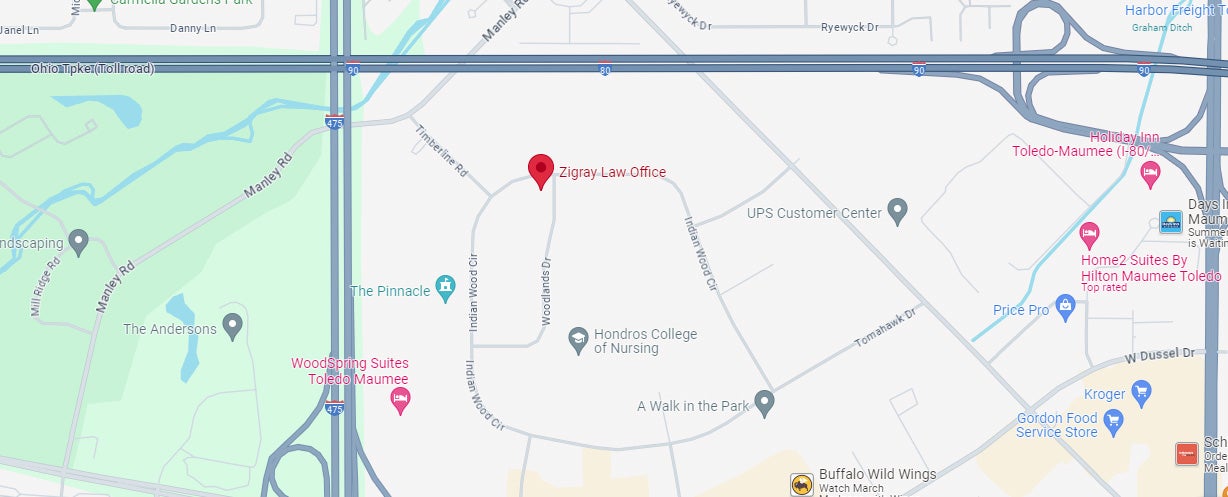
 1755 Indian Wood Circle Suite 400
 Maumee, OH 43537 Call Today 567-302-3604567-302-3676
Quick Links