On Behalf of Zigray Law Office, LLC | Nov 26, 2019 | Probate Litigation When a loved one passes away, you need time to grieve . If something unexpected happens, like not being named in their will, it can may disrupt the grieving process. Being in this situation can bring up a lot of emotion and confusion. If you plan to contest the will, you must act fast. Ohio has one of the shortest deadlines for disputing a will at only three months from their date of passing. What determines your ability to contest a will? To contest a trust, you must first have legal standing. Legal standing means that you either need to be an heir named in the will or be a legal heir under intestate laws. Intestate laws govern the distribution of assets if a person passes away without a will. Legal grounds for contesting a will Beyond your eligibility for legal standing, the court will require you to have evidence that the will is invalid. Some of the common reasons for contesting a will include: Improper execution: Ohio requires the presence of two witnesses during the signing of the document. Testator lacking mental capacity: If your loved one did not have the mental capacity to execute their will, the will can be contested. Outside influence on testator: If someone pressured the testator to sign or change the will, you might be able to contest it. Before attempting to contest a will, you might want to evaluate if the costs are worth it for you. Contesting a will can be financially and emotionally exhausting. If your potential inheritance is enough to cover legal fees by a significant amount, then you may want to combat the will in court. Consulting with an experienced probate attorney can help you understand the complicated laws involved in probate court.
Will my assets be safer in a will or a living trust?
On Behalf of Zigray Law Office, LLC | Nov 22, 2019 | Probate Litigation Choosing how and in what form to leave your monetary legacy is a major decision. If you have a significant amount of assets, what you decide could affect the future of your beneficiaries in a big way. However, contention among beneficiaries can reduce your estate due to litigation costs or even tarnish your legacy. This makes your choice even more vital. Which is harder to contest? While both a will and a living trust are viable options, a trust is more difficult to contest if you think that will be a likely outcome. Beneficiaries of a trust may have a longer period in which to file a suit (two years vs. three months for a will), but it is more difficult in every other way. A living trust vs. a standing will Many people prefer trusts, because they can avoid probate. A living trust is active in nature. Alternatively, a will is static. True to its name, a living trust is enacted while you are alive, which means it will be more difficult to contest on the grounds of incapacitation. A contester would have to prove that you have been incapacitated for the duration of your trust’s existence—a difficult task. Second, a will’s assets will be frozen if it is contested, to preserve the estate. A trust’s beneficiaries, on the other hand, continue to receive the assets as planned throughout contention, honoring your wishes. Take care to prepare your legacy with an experienced attorney, who can help you avoid these potential pitfalls with an airtight estate. Proper documentation will help preserve your wishes beyond your death.
Probate travels out-of-state for estates in multiple states
On Behalf of Zigray Law Office, LLC | Nov 20, 2019 | Probate Litigation When someone dies owning property in multiple states, their estate may need to go through probate in each of those states. To many people, probate is about complex laws and calculations, the death of a loved one and court battles. The chance to have multiple probate proceedings does not help. There is some good news for multistate probate. It may not be as bad as it sounds. And with good planning, your estate might avoid it completely. When property is both here and there An estate often needs “ancillary” probate if the deceased owns land or a house in another state, specifically, kinds of property governed by the laws of that other state. Real estate is the typical case for ancillary probate because, for example, the Michigan lake cabin and the land that goes with it are part of Michigan and are subject to that state’s laws. Usually, the guitar a parent kept at their sibling’s house in Chicago will not need ancillary probate. Probate begins at home Probate will need to start in the deceased’s home state, their domicile, for what is often called “domiciliary probate.” There, the typical process has the court deciding if the will is valid and appointing an executor. The executor gathers up all the assets and pays off all the debts and distributes the remaining assets. Ancillary probate usually gets easier The state that hosts, for example, the person’s second home then begins its probate process (“ancillary probate”). It tends to be simpler simplified the ancillary state usually accepts the documents and decisions of the domicile state, such as their validity of the will and choice of executor. There are many opportunities for conflict and complications, and most people hire an attorney in the second, ancillary state to keep an eye on that state’s laws and procedures. Avoiding ancillary probate Property owners have three ways to try to avoid ancillary probate: Own the property as a joint tenancy with the right of survivorship. The death of one owner instantly makes the survivor the sole owner. Create a living trust instructing the fate of the property upon your death. The ancillary state may allow a transfer-on-death deed. These measures are, of course, things the owner must do while still alive.
What happens if you die without a will in Ohio?
On Behalf of Zigray Law Office, LLC | Nov 6, 2019 | Probate Litigation “Intestate” is a legal term for the estate of a person who dies without a will, according to Ohio’s inheritance laws. While having a will in place when you die allows you to control how your assets will be distributed, the state’s intestate succession statutes dictate how a court will award your property to family and others when an estate plan doesn’t exist. A court looks at property divided into two parts. Real property is real estate, such as a home, land or anything else connected to the ground. The other part is personal property, which includes all of your other possessions. Ohio’s probate process Courts distribute a person’s property through the probate process. When a valid will is involved, they usually follow the person’s plans and allow an executor, named by the decedent, to carry out those wishes. However, when no estate plan is in place, they will follow state laws. Estates can avoid probate, or an expedited process can happen if these conditions exist: Avoid probate entirely if either: The estate is valued under $45,000, and the surviving spouse is the only heir The estate’s value is under $5,000, and the decedent’s final expenses are under $5,000 Expedited probate process if either: The estate is valued under $35,000 The estate’s value is under $100,000, and the surviving spouse is the sole heir How is property distributed? If the surviving spouse and the decedent had no children or all of their children were with each other, the surviving spouse gets 100% of the estate. If the decedent has more than one child from another relationship, the surviving spouse receives the first $20,000 of the estate plus a third of the remainder. However, if the surviving spouse is the parent of at least one child with the decedent, their share rises to the first $60,000 of the estate, plus one-third of the remaining balance. Consult a probate attorney Settling an estate without a valid will or trust can be a complicated and emotionally-charged process. Even if a will is in place, you may have been wrongly excluded from inheritance or discover assets are missing or hidden. An experienced probate attorney here in Ohio will represent your interests and help you resolve those conflicts during the probate process.
What happens if you die without a will in Ohio?
On Behalf of Zigray Law Office, LLC | Oct 21, 2019 | Probate Litigation There are things you may put off. Scheduling dentist appointments, bringing your car in for an oil change, and getting a haircut may be things you keep putting on the back burner. While those things are generally inconsequential, creating a will is something that everyone should have. Not having a will is essentially not having a plan. A lack of plan can leave your surviving loved ones scrambling in the event of your untimely death as a court is then in control of your estate. Going down the line Who the court places in charge of your estate depends on your situation. If you were married, your spouse is the first person of choice for a court for administrator if they live in Ohio. Otherwise, the court would look to your next of kin, like an adult child or sibling who lives in state. Should the court’s initial choice decline the role of administrator, they will hold a hearing to determine an administrator. If the court cannot find a suitable candidate, they will choose a worthy resident of the state. How soon should you create a will? One way to leave less to chance in the event of your death is to create a will. It’s often a smart idea for you to create a will if you have married, purchased significant property like a home, or have children. You can determine everything from what happens to your vehicle to how your family pays for your funeral, and more. Thinking about your own death may make you sad and uncomfortable, but you may find that knowing that your loved ones would have fewer stressors because you had a good plan gives peace of mind.
How to contest a will because of undue influence
On Behalf of Zigray Law Office, LLC | Mar 14, 2019 | Probate Litigation When a loved one passes away, it’s a profound loss. This loss can reverberate through your life and the lives of family members. As you grieve this passing, the loved one’s estate is often distributed. You may expect that their directives and wishes will be faithfully executed in the last testament and will. But that is not always the case. Your loved one’s will may have been rewritten or altered to unfairly or inappropriately benefit others. These amendments to the will may have diminished your inheritance or possibly excluded you. When these or similar circumstances arise, you may dispute the validity of the will and question if someone exerted undue influence over the estate holder. Under Ohio law, you can challenge the will in probate court. Factors that indicate undue influence In cases of undue influence, someone has coerced the testator. Either motivated by greed or spite, this person has manipulated the testator to either gain property or exclude another family member. The following factors typically constitute undue influence: · The estate holder was in a vulnerable mental or physical state · Evidence of improper influence over the testator · A slanted will that is not fair or equitable Illnesses, dementia and many other issues can make elderly testators vulnerable. Unscrupulous people often recognize these deficits and take advantage of an opportunity for their personal benefit. Challenging the will in probate court In most cases, family members do not contest a will in probate court. However, under certain circumstances, wills have been unfairly and unduly altered. If this is the case, the will does not contain the testator’s actual instructions and wishes. Under Ohio law, you can contest the will but you should be prepared to establish proof your loved one was under undue influence. You need to gather all documents, letters, emails, text messages and any other correspondence to support your claim. An attorney can often help identify evidence that the court will accept. What is the meaning of testamentary capacity? For a person to have testamentary capacity in the eyes of the law, they need to understand the extent of the property that they own, and what the consequences of disposing of their property or leaving it to another person will be. The question of whether a person had a testamentary capacity to make their will in an informed way can be a very subjective one. This is because we are dealing with the nature of a person’s mental faculties at a certain point in time. What can complicate things further is the fact that people suffering with conditions such as dementia can change quite dramatically in their mental faculties from day to day. For example, on one day they may be lucid and able to function completely normally, whereas on the next day they could be feeling confused. Why are elderly people particularly vulnerable when making a will? When a person has a lack of testamentary capacity, they can be influenced easily. This might mean that they will fall under the influence of manipulative and fraudulent people, and, as a result, they may change the instructions in their will. If you believe that your loved one created a will when they did not have testamentary capacity to do so, it is important that you take action.
When stepparents exert undue influence on a last will
On Behalf of Zigray Law Office, LLC | Feb 14, 2019 | Probate Litigation Many children of divorce struggle to accept their parents’ decision to end the marriage, even many years later. The unresolved emotions from the dissolution of the family often impact the relationship that the children have with their parents’ new romantic partners. When a parent begins dating or remarries, those are sure signs that hopes for the family to reunite are futile. Adult children can usually quell their negative feelings about a divorce or at least keep them to themselves. However, all of that resentment may bubble to the surface when a remarried parent dies. Sometimes, the death of a loved one results in a second shock when the last will reveals that the stepparent has effectively replaced the children as beneficiaries. The children in the family may have legal options available, depending on the circumstances in their family. In some situations, it may become necessary to challenge the last will or estate plan. Can you show that a stepparent had undue influence on the changes to the will? Wanting to challenge a will due to unhappiness with its contents is a common reaction to disappointment or surprise. However, the courts won’t validate challenges just because you are displeased. Instead, you need a legal reason to challenge the last will or estate plan. Common reasons include lack of testamentary capacity due to dementia or age, or undue influence. Undue influence involves an individual other than the testator making decisions about the last will. The final will could be completely different than the legacy the testator always wanted to have. This influence often takes the form of bullying, isolation or emotional manipulation. A stepparent who serves as caregiver to an ailing parent, for example, could use their position to coerce or manipulate the testator to change their last will. They could also prevent children and other family members from visiting and then intentionally stoke the anger of the testator against the family members by claiming they have abandoned them. An attorney can help you determine if you have a strong case Emotions often run high during the administration of estates. People get upset and may behave irrationally. The expectations that some people have may not conform with reality or the law, in some cases. It is always in your best interest to talk with an attorney when you worry about the contents of a last will or estate plan in Ohio. The attorney can review the situation and let you know if you may have grounds for challenging the will. If you do, the probate courts could choose to handle the allocation of assets themselves, refer to a previous version of the will or otherwise take steps to uphold the original intended legacy of your loved one.
Do you have to worry about that in terrorem clause?
On Behalf of Zigray Law Office, LLC | Jan 15, 2019 | Probate Litigation There are many valid reasons why an heir or family member may need to bring a challenge to a will or estate plan. Maybe you suspect that the executor or trustee is violating their duty for personal profit. Perhaps there is evidence that there was undue influence on your loved one before changes were made to the will. It’s also possible that the most recent version of the will resulted from decisions made during a period of diminished capacity for the testator. As a beneficiary or heir, you have the legal right in the state of Ohio to bring a challenge against either the estate plan itself or the executor. However, there are potentially consequences to bringing a challenge. If your deceased loved one included an in terrorem clause, commonly called no-contest clauses, you may worry about your rights to bring a challenge against the estate. After all, these clauses typically include a financial penalty for anyone who challenges the estate. How no-contest clauses work When a testator wants to make sure that their exact wishes get followed by an executor, they include a no-contest clause in their estate plan or last will. The inclusion of such a clause often reflects worry about potentially frivolous challenges motivated by personal greed. The language in this clause will create a penalty for anyone who brings a challenge against the estate plan. In some cases, bringing the challenge could result in the forfeit of a certain amount of the assets allocated to that specific individual. Other times, a challenge could mean completely losing out on the inheritance outline in the last will. In specific situations where the discrepancy between expectations and the existing will is significant, a smaller penalty could prove worth the risk. However, in cases of total disinheritance, bringing a challenge may not result in any benefits for the individual challenging the estate, but rather only financial consequences. Ohio courts almost universally uphold no-contest clauses Each state has its own approach to dealing with in terrorem clauses. Ohio is one of a few states that very strictly enforces these clauses. While many other states will have exceptions for contests brought with probable cause or in good faith, Ohio does not include any exceptions. Even if you have evidence of undue influence or diminished capacity, challenging the last will could still result in the loss of your inheritance. In some cases, depending on the language, it may be possible to challenge an executor without challenging the estate itself, thus protecting you from the consequences of an in terrorem clause. Discussing the issue with an experienced probate litigation attorney who understands how the Ohio courts handle these complicated cases is a good first step to determining what your options may be.
Challenging a will because of undue influence
On Behalf of Zigray Law Office, LLC | Dec 14, 2018 | Probate Litigation When it comes time for one generation to pass on an estate to the next through a will, conflicts often arise over the validity of the document. This is particularly true when one beneficiary believes that another beneficiary used their influence on the will’s creator to better their position. Many families have seen long-suffering tensions between siblings, parents, and other family members erupt after the reading of a will makes it clear that one party benefits unfairly from the will’s terms. Of course, without a strong legal strategy to reach a fair resolution, every party involved in this kind of conflict may lose out in the end, draining the resources they are fighting to control through legal expenses and mismanagement of valuable assets. If you believe that you have grounds to challenge a will because someone else used undue influence to steer the will’s terms, make sure to use the legal tools and guidance around you to keep your rights and priorities secure before it is too late. What qualifies as undue influence? The term “undue influence” may apply to many types of behavior, so it is important to carefully examine the specifics of your own circumstances to judge whether anyone acted unethically in the creation of the will in question. In general, a person who places pressure on the creator of a will to sign a will with terms that benefit that person may use undue influence. Of course, this is not always easy to identify and prove, so careful examination of the facts is crucial. The simple fact of a will benefiting one beneficiary more than others is not typically grounds for challenge. Will creators commonly use their own judgment when creating wills, and do not always intend equal or equitable distribution of their estate. For instance, if a parent has three children and is cut off from one of them, then they may not leave an equal portion to that child because that is their wish. Regardless of the interpersonal issues at hand and the strain it may place on the surviving family, this is often well within the law. It is wise to identify any specific actions that the offending party used to influence the creation or amendment of a will. Overt examples of undue influence may include: Threats of punishment or abuse Emotional manipulation Refusing to provide food, medication or other necessities Orchestration of the will creator’s relationships with other beneficiaries Keeping the will creator isolated and dependent Protecting your priorities These issues are not simple to resolve, so you must have a strong grasp on the grounds for allegations of undue influence, as well as the results that you hope to achieve. For the sake of the ones you love and the memory of the creator of the will you wish to challenge, create a sturdy legal strategy to secure your rights. Ensure that you have the tools you need to resolve this frustrating conflict in a fair and equitable manner.
Estate battles: When sentimental items matter most
On Behalf of Zigray Law Office, LLC | Nov 14, 2018 | Probate Litigation Your parents made an estate plan and it very clearly laid out what should be done with their financial assets. Bank accounts got divided. Investment portfolios got cashed out and split up. Real estate got sold so that you could split the money perfectly. If your parents’ estate was worth $1.5 million, you and your two siblings both got just about $500,000. After all, your parents knew that leaving you an unequal bequest could start an estate dispute. Children want things to be fair and equal. Your parents prioritized that and planned for it. The problem, though, is that you really don’t care about money. You’re all fairly well off. If your brother got $100,000 more than you or your sister got some financial assets that probably should have gotten divided three ways, you wouldn’t care. They wouldn’t either. Money is not your biggest issue. Sentimental value is. Memories What you really care about are the things you can’t replace. You care about your memories. Things with sentimental value carry a lot more weight. Maybe it’s an old truck that you all used when learning how to drive a stick shift for the first time with your father. Maybe it’s a painting that, even though it’s not from a famous artist, adorned your parents’ living room wall for as long as you can remember. Maybe it’s the Christmas decorations that you all put up together when you were kids, carols playing on the radio as lights lit up the living room. You wanted to hang them at your own home with your children. These are things that may have no monetary value, but they mean everything to you because they give you that connection to your parents. They connect you with the past. You value that far more than a little more money. No specifics Part of the issue here may be that your parents, as specific as they were with money, just did not offer you a solid plan for every little trinket in the house. Your sister says that your mother promised something to her, your brother says that he doesn’t believe her and you say that you have loved that item far more than either of them. You assumed it would go to you. Even parents who try to plan well often spend far too little time on personal property. To your parents, that painting was just something they bought on a whim. The Christmas decorations were nice, but easily replaceable. The old truck should have gotten sold for something more reliable. They didn’t put anything like that in the estate plan because they didn’t realize how important those assets were. Your options Are you and your siblings entering an estate dispute for any reason? Make sure you know exactly what legal options you have.
Celebrity will and estate mistakes to avoid
On Behalf of Zigray Law Office, LLC | Oct 18, 2018 | Probate Litigation Even celebrities make estate planning mistakes, but there is something you can learn from them. By not making plans for your estate or not making the right plans, you could end up making your family go through probate or see your assets depleted by taxes. You’d think that celebrities would have all their finances in order, but that’s not always the case. Many die unexpectedly or younger than they thought they would, leaving behind a legacy but also a lack of financial planning. What are some of the mistakes celebrities have made with their estate plans? Jimi Hendrix starts the list. He died at age 27 with no will. His father received all his assets, but his brother received nothing. The brother was later cut out of the father’s will, meaning that he received nothing of the $80 million legacy. Heath Ledger’s death was a shock to many, but the trouble for his estate was a lack of updates. He died at 28 years old, and he did have a will. Unfortunately, it was written before his relationship with Michelle Williams and several years before the birth of their daughter. The will left Ledger’s assets to his sister and parents but did not go directly to his girlfriend or daughter. Leona Helmsley died in 2007 and left behind an estate word around $17 million. She left $12 million of that money to her dog and $5 million to charity. She cut two grandchildren out of her will and left two in. The two left out were able to take the case to court to challenge the will and obtained $6 million to share among themselves. The dog received $2 million in a trust. Their argument was that the woman was not mentally fit to create the will and trust. Without a medical exam, the court had to agree with them based on the evidence they provided. These are just three examples of celebrities who ended up with their assets left to people they may have not wanted receiving them. In some cases, simple updates or a basic will would have completely changed the circumstances. If you are older and starting a will, make sure you get a mental exam to guarantee competency. If you’re young, start your will early and update it with every major life event, so those whom you want to benefit from your assets can do so in the future.
ESTATE AND PROBATE HELP THROUGHOUT OHIO
Challenging a will: Determine if you have good grounds On Behalf of Zigray Law Office, LLC | Sep 17, 2018 | Probate Litigation There are several reasons for challenging a will. While the majority will pass through probate with no issues, around 1 percent of all wills will be contested. The problem with contesting a will is that the person who wrote the will is no longer alive. This makes it very hard for the courts to determine what their wishes would have been. Courts usually stick closely to what the will says, but there are exceptions to every rule. For instance, if you can show that the will was recently changed before death, then there may be a reason to contest the will and good grounds to do so.Usually, successful challengers are spouses. The most successful grounds show that the person who wrote the will lacked testamentary capacity or was unduly influenced. What happens when you challenge a will? When you challenge a will, you can challenge a portion of the will or the entire thing. If you are successful, the court will decide if the will should be invalidated and its entirety or just in part.If the will is voided and there is no previous will to fall back on, the court is likely to distribute assets as if no will ever existed. What are good grounds for challenging a will? You may be able to successfully challenge a will if you can show a lack of testamentary capacity, undue influence, fraud, forgery or that there is another will that trumps the current will. Which wills are the easiest to contest? It is easiest to contest a handwritten will without the appropriate witnesses. The will needs to be signed by the testator with at least two witness signatures from adults. Most states require that the witnesses are not those who will later become heirs to the estate.Some states do allow for handwritten wills while others do not. In states that do, the wills are called holographic wills. They’re the easiest type to contest because the testator writes it in their handwriting and may have no witnesses. The document needs to be dated as well. A good will matters to your estate, and it’s something to build up from an early age and to update accordingly. If you are a beneficiary of a will and worry that your loved one was unduly influenced or lacked the capacity to make decisions mentioned in the will, you can challenge the will in court.
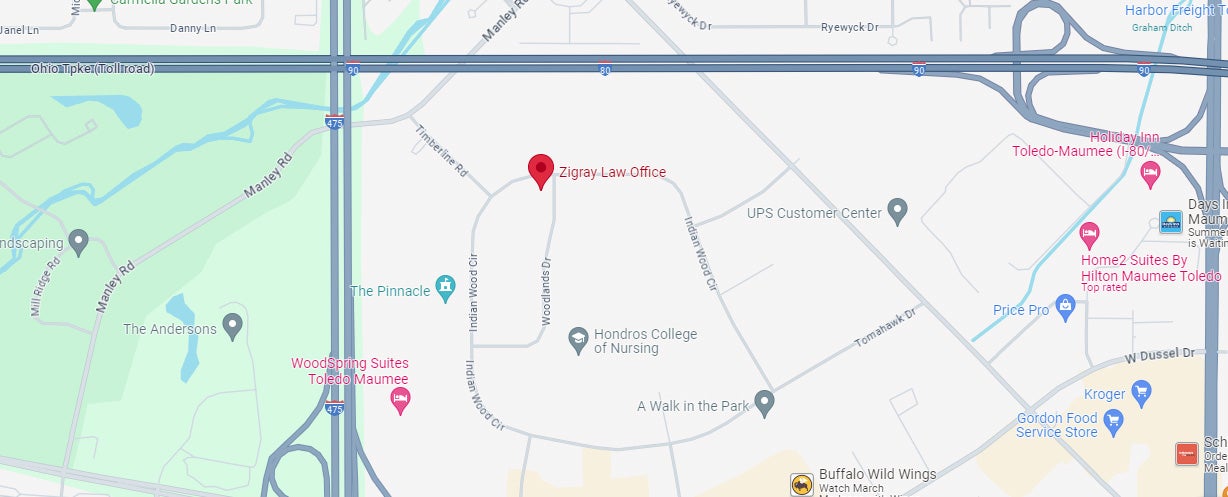
 1755 Indian Wood Circle Suite 400
 Maumee, OH 43537 Call Today 567-302-3604567-302-3676
Quick Links